illustrations by wendy martin

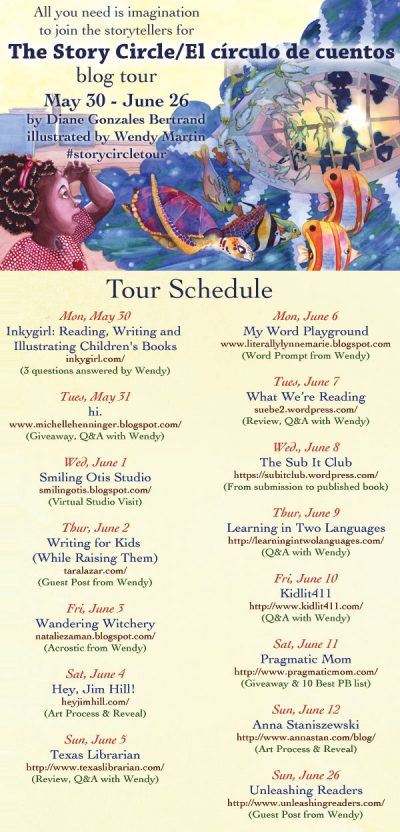
Blog Tour

How To Find An Art Licensing Agent – guest post by Tara Reed

Wednesday, September 8th, 2010

How to find an Art Licensing AgentIf art licensing is new to you or seems overwhelming, you are not alone! Many artists ask if they should find and agent or how to go about finding one. Have you weighed the pros and cons of promoting your own work vs. working with an agent?  There is no right or wrong answer, just what is right or wrong for you and your business.

The goal of my new eBook, “How to Find An Art Licensing Agent” is to help artists understand the business and become attractive to potential agents.

You will prepare your mind, your pitch and your portfolio.

This eBook will help you think through who you are as an artist and what you have to offer in art licensing. Learn to present yourself in a way that makes you stand out from the crowd.

Learn how to present yourself and your art so you feel more confident in your search process.

From what to say on the phone to how to write a compelling query letter or email, you will find usable information to help you find an agent that is a good fit for your business.

Receive help in picking your prospective agents.

13 Agents offer their perspectives and contact information in the eBook. You will quickly see that not all agents work or think in the same way. Perhaps one of these agents will look like a potential fit, or maybe you will look at other options as well. There are questions to ask, things to consider and ways to keep it all organized!

110 pages of valuable information to get you focused, organized and ready to find a partner for your art licensing business.
The introductory price of $57 will only last till the end of September so check it out today! ArtLicensingInfo.com/agent.html*

Here’s to your creative success!

– Tara Reed

P.S. If you aren’t 100% certain that finding an agent is right for you, download the questionnaire on the linked page and seriously consider the 25 statements. Answer them honestly then log onto the web page on the bottom of the questionnaire for some insights to help you make a decision. No matter what you decide, we have help for you!

* FTC disclosure: Wendy Martin is an affiliate of the ArtLicensingInfo.com* family of websites because she believes in the products. She will earn a commission if you click the links in this post as a way of thanking her for helping spread the word and to help ‘share the wealth’ with artists. Thank you for clicking!

How and Why to Save your Digital Photos to DVDs

Tuesday, July 13th, 2010

Guest blogger today is Tara Reed.

If you are like many people, you plug your digital camera into the computer, transfer your photos and delete them from the camera. You share a few on Facebook or by email… but do you back them up?

Backing up your photos and saving them in multiple locations (as in, physical buildings – not all in your home) is essential if you want to ensure you have your pictures for years to come.

Here is a video showing you how to export your photos from iPhoto to jpegs, so you can burn them to DVD’s (CD’s only last about 5 years but DVDs have an average life of 60) and store them off site. Or you can upload the jpegs to any other offsite storage and backup location as well. The key is, don’t have all your important photo memory data under one roof!

Here’s to the safe preservation of your memories!

– Tara Reed

P.S. Want to learn more about other backup and software options that can help you in your life or creative business? Do you want to learn about how to earn an income licensing your art? Be sure to visit Tara Reed’s sites, ArtLicensingInfo.com* or ArtLicensingBlog.com* for lots of free and for-fee resources.

(* FTCdisclosure: I have no vested interest in your purchase of iPhoto software, but do earn commission if you click the links and purchase products from the Art Licensing Info family of websites.)

Interview with PB Artist Elizabeth Dulemba

Wednesday, September 23rd, 2009

Dulemba-candid200pElizabeth O. Dulemba

When did you get started illustrating for children? What did you do before?

I dove into this business in August 2001 – right before 9/11. The book market crashed as a result and my timing couldn’t have been worse. But dreams don’t tend to consider these things when they grab your hand and run off with you.

Tell us a little bit about the recent picture book you wrote and illustrated, SOAP, SOAP, SOAP JABON, JABON, JABON.

Soap-250-bilingThis is my first picture book as both author and illustrator – just took seven years! Soap is an adaptation of a classic Appalachian Folktale and my second book with Raven Tree Press. They were thrilled with the first book I illustrated with them, Paco and the Giant Chile Plant ~ Paco y la planta de chile gigante, and asked me to come up with a follow-up. But Paco wouldn’t stay Paco – he moved ahead to present day and became a young boy named Hugo. The entire journey with this story has been a blast.

06-07 30-31

I understand the book is bilingual. Do you speak Spanish? Are there any noticeable differences from an English only book format?

Paco-400When I got the contract for Paco, I started taking intense Spanish lessons at the Latin American Association in Atlanta. There was no way I was going to have a bilingual book and not speak the language! I’m not fluent yet, but I can get by.

There’s a lot of redundancy in the text in the bilingual version so that a reader can learn meanings through context. That redundancy was toned down in the English version. It was very important to me that each version be able to stand on its own as a strong story – I hope they do that.

What are you working on right now? Do you have any other books or art projects you’d like to talk about?

I am currently illustrating The Twelve Days of Christmas in Georgia written by Susan R. Spain for Sterling Publishers. It’s been a lot of fun to research all the fun locations in Georgia – I’ve rediscovered my own state!

I’m also writing a new novel and have several picture books and my first novel being shopped by my agent.

Do you do non-children’s book art (licensing, fine art, etc.) or art just for fun? Is that art similar or different from your children’s book art?

Bookworm-smMy focus has always been children’s art – even in my graphic design days. I don’t know if my coloring pages http://dulemba.com/index_ColoringPages.html would count as something different? Scrapbookers and crafters have found them and seem to love them, although I create them mostly for librarians, parents and book sellers to share with their children.

Do you illustrate full time? If not, what else do you do?

I mostly write and illustrate full time. I’ve been very lucky in that respect. Although, I also do a good bit of public speaking at conferences, schools and events, and some teaching like at the John C. Campbell Folk School where I teach “Creating Picture Books.” Luckily, I enjoy everything about this crazy career.

When you illustrate a picture book how do you decide what scenes and details to draw?

Sometimes the images jump out at me. If not, I try to focus on a key emotional connection occurring in the text, either in plot or between characters. I also try to play up perspective in an interesting way.

When illustrating picture books do you include a visual storyline not mentioned by the text or include animals or people you know?

Oh yes! In The Prince’s Diary there are two mice getting into trouble throughout the story. And in all my books, my dog Bernie makes an appearance. Sometimes he’s easy to find, sometimes not so much, but he’s always there.

Can you explain your art process?

I often sketch by hand, scanning in separate elements and then arrange the composition in Photoshop. There I do color studies or lay in the basic colors. I then import the piece into Painter where I apply shading and painterly effects. Although in this new book I’ll be experimenting solely in Photoshop. Should be fun.

My portfolio can be seen at http://dulemba.com/index_illos.html.

Do you have a favorite color or palette?

I think everybody has a personal color palette. These aren’t necessarily your favorite colors, they’re just colors you continuously gravitate towards in your art or decorating or clothing. My color palette is lime green, teal, and orange, and they pop up throughout my art.

As far as a favorite color – I tend to be more of a green person rather than a blue person (I tend to think people are one or the other), but I do love mosses and smoky teals.

What is your favorite medium to work in? Have you always worked in this media? If not, why did you switch?

Digital is my chosen medium, but I only claimed it about 6-7 years ago. Before that computers just weren’t up to the task. I used markers and colored pencils (the quick tools of graphic design) but I could never get the rich colors and textures I wanted. I have never claimed to be a painter – I never learned how to mix colors with ease – but with the computer I can really spread my wings.

Did you always want to be an artist when you grew up?

Yup. There was never any question what I was going to be. What type of artist was the question. I was lucky to have a strong support system around me as I tried to figure it out.

Do you use models/source pictures or do you draw from your memory/imagination?

I tend to start from imagination first – always have. But once I have the idea of what I want I sometimes look at photos to figure out the specifics of things. I’ve found that if I rely too heavily on photos, my art turns out incredibly flat and lifeless. I prefer the wonky ideas and perspectives my brain comes up with.

If you could be anything other than an artist, what would you be?

Well, a writer too, but I’m already working on that. If I wasn’t either, I’d probably be a teacher. I love sharing and helping others figure out what their passion or talent is.

What gets you through an illustration when you’re stuck for inspiration?

I put it off. Ha! Truly, I’ll work around it. If it’s part of a book, I’ll do other spreads first. If it’s a one-time illustration, I do a lot of sketches. I’ve found that just putting it in my head helps. It simmers in there somewhere and I can usually come up with something when I come back to it after some down time.

What book do you remember from when you were young? (list one or multiple books)

The Golden Book of Elves and Fairies, illustrated by Garth Williams. It was my mother’s book and then it was mine. The binding is in shreds from all the hours I sat staring at the illustrations as a kid. The images were magical and sucked me in completely. I always strive for my art to do that as well.

Is there a children’s book illustrator whose work you gravitate towards in the bookstore now? (list one or multiple illustrators)

There are so many! But right now I’m especially enjoying Adam Rex, Patricia Cantor, Anton Petrov, Brandon Dorman, LeUyen Pham, John Rocco, and Richard Johnson.

If you could illustrate any writer’s new work, who would it be?

Oh wow – that’s a tough one. There are so many writers whose work I truly respect. The first ones who come to mind though – Carmen Deedy, I love the stories she chooses. Charles Gigna (Father Goose) – I love his poems. Ironically, a lot of the books I’d like to illustrate are coming out of my truly talented author friends – I’d love to put illustrations to their words.

Who do you want to be when you ‘grow up’?

Do I have to? I seem to have avoided it okay so far…

Thank you for sharing your time with us, Elizabeth! Good luck with your new books.

Picture book author/illustrator Sarah Brannen

Tuesday, August 25th, 2009

Talented author and illustrator Sarah Brannen is with us today. She is the creator of the beautiful picture book Uncle Bobby’s Wedding. Read on to see what she has to say about her books and her creative process.

Hi Sarah. Thank you so much for visiting.

When did you get started illustrating for children? What did you do before?

I’ve always been an artist; I spent a number of years pursuing painting, and showing in galleries. At the same time, I did architectural renderings to pay the bills. I had wanted to illustrate children’s books for a long time, and I finally decided to go after it seriously in 2001.

Tell us a little bit about the recent book you wrote and illustrated, Uncle Bobbie’s Wedding.

Uncle Bobby’s Wedding tells the story of a little girl and her favorite uncle. When he announces to the family that he and his boyfriend are planning to get married, Chloe is afraid that they’ll lose their close relationship. Bobby and Jamie start including Chloe in their lives together, and after she gets to know Jamie better she realizes that two uncles are better than one.

Oh, and they’re guinea pigs.

Uncle Bobby jkt-white FRONT

I understand this book caused some controversy. What happened and how did you deal with it?

Of course I knew that some people would have a problem with the Uncle Bobby’s Wedding because it shows gay people (guinea pigs) in a favorable light, and because Bobby and Jamie actually get married at the end. Same-sex marriage is legal where I live and the people I know don’t make a very big deal about it.

The book has been challenged a number of times. Usually this means that library patrons have requested that the book be removed from the shelves or shelved in a special area. I’ve gotten some hate mail and I’ve read some very nasty talk on message boards.

I wish that people would read the book before criticizing it. Also, I can deal with criticism of the book; not everyone has to like it. But I get upset when I read vicious hate directed towards gay people. That’s not ok.

UBW_pp4-5_final_small

What are you working on right now? Do you have any other books or art projects you’d like to talk about?

I’m currently illustrating a non-fiction book for Charlesbridge Publishing, Troy and the Trojan War. I’m also finishing up a book about a figure skater. I can’t announce it yet but it will be soon!

Do you do non-children’s book art (licensing, fine art, etc.) or art just for fun? Is that art similar or different from your children’s book art?

All art is fun!! I draw for pleasure whenever I can, and I sell it if people want to buy it. I’m not showing in any galleries at the moment – there just isn’t time. My watercolors are similar to my illustration. My oil paintings are quite different.

Do you illustrate full time? If not, what else do you do?

I write and illustrate full-time.

When you illustrate a picture book how do you decide what scenes and details to draw?

I read the story several times and decide on the page breaks if they’re not already determined. As I read, images come into my head. I start sketching and things develop on the paper. If I get stuck, sometimes I’ll ponder a scene or character while I’m out walking.

When illustrating picture books do you include a visual storyline not mentioned by the text or include animals or people you know?

Whenever possible, I try to add interesting details. This might include another storyline. It’s fun to use people or animals from my life in the illustrations. I haven’t done it much yet though.

Can you explain your art process?

I sketch on layers of trace. When I have a final view I do a fairly careful line drawing and scan it and turn up the contrast before I print, so the lines are really black. I trace the drawing onto watercolor paper fairly loosely, just to place all the elements. Then I redraw, hoping to maintain some of the freshness of the sketch.

My watercolor technique uses several thin glazes; it’s an old Beaux Arts technique that’s great for big washes and allows a lot of control.

Do you have a favorite color or palette?

I have some pigments I like, which probably results in a similar palette. I experiment with new ones though.

What is your favorite medium to work in? Have you always worked in this media? If not, why did you switch?

I’m happiest sitting and drawing with pencils and watercolor. I used to work in oils and I felt like it was a fight, every day. I finally decided just to use what I enjoyed most.

Did you always want to be an artist when you grew up?

There was no decision. I always knew I was an artist. My father gave me drawing lessons before I could write.

Do you use models/source pictures or do you draw from your

memory/imagination?

All three. I use all the resources I can find if I have to draw something I’m not familiar with. If I need to use photos I try to take my own. I’m a semi-professional photographer, although I mostly just take photos of figure skaters.  (http://sarahbrannen.yellapalooza.com/skating/index.html)

If you could be anything other than an artist, what would you be?

An opera singer.

What gets you through an illustration when you’re stuck for inspiration?

Like I said earlier, I just walk and walk and try to clear my head.

What book do you remember from when you were young? (list one or multiple books)

Oh, goodness, everything! I couldn’t possibly make a list.

Is there a children’s book illustrator whose work you gravitate towards in the bookstore now? (list one or multiple illustrators)

I love Brian Lies, Lizbeth Zwerger, Shaun Tan and Lisa Kopelke’s work.

If you could illustrate any writer’s new work, who would it be?

Gail Carson Levine!!! Are any art directors out there listening??

Who do you want to be when you ‘grow up’?

Exactly who I am now, with more book contracts.

Thank you again, Sarah, for your time. Best of luck with your upcoming books. I can’t wait to see them on book store shelves.

You can visit Sarah on her web site at: http://sarahbrannen.yellapalooza.com/

Interview with picture book illustrator Nikki Shoemaker

Wednesday, July 8th, 2009

Q: When did you get started illustrating for children? What did you do before?
A: I was surrounded by people who acknowledged my talents, my entire life. And always knew I would go on to do something artistic. In high school, I decided to go on to art school at Columbus College of Art and Design. Their instructors guided me towards a career in illustration. I have a BA in illustration and graduated in 2001. I have been moving around a lot the past eight years. I have been a custom framer, a substitute teacher, a youth services librarian and now a graphic designer for a library system. I do all this while still working quietly building my portfolio and gearing up to enter the industry. After learning how to network online, I really started to see a jump in work that was coming my direction.

Q: Tell us a little bit about the recent picture book you illustrated, WHAT’S WRONG WITH MUD by Gillian Colley.
wwwm_coverA: The story was the 2007 winner of the ABC Picture Book Competition and I was asked to illustrate it by Rita Mills of the Book Connection (who puts on the contest). The book is a cute story about ducks that like to keep clean and pigs that like to play in the mud. One day they decide to trade places and find out that each way of life is fun in it’s own way.

Q: What are you working on right now? Do you have any other books or art projects you’d like to talk about?
A: I am currently working on a series of three books being published by 4RV Publishing, Inc. The first book, Lemur Troops & Critter Groups by Rena Jones, should be out later this fall. The other two will come sometime in 2010. I also illustrate on a regular basis for Stories for Children Magazine. I actually illustrated the cover for the July issue so stop and see it. www.storiesforchildrenmagazine.org

Q: Do you do non-children’s book art (licensing, fine art, etc.) or art just for fun? Is that art similar or different from your children’s book art?
A: I haven’t dove into that at this time because I am still carrying the graphic design job at the Lane Libraries. It seems like licensing is picking up in the illustration field and right now I know nothing about getting into it, but I am not opposed to learning.

Q: Do you illustrate full time? If not, what else do you do?
A: I have a day job, which I mentioned above. I illustrate in the evenings and on weekends and occasionally take time off to work on illustration. I suppose you could say my day job falls under this category. I design program posters, brochures, signage and much more for the library and have a lot of fun with all the creative freedom I have there.

Q: When you illustrate a picture book how do you decide what scenes and details to draw?
A: I read and re-read the manuscript several times and each time I jot down notes about things I see as a little movie plays out in my head. Each time I edit or add to my notes until I get a clear image in my head. From there I write down all the things I need to research so that I create clear visual images. Visual literacy is very important to picture books and it is important to me to paint a clear picture for all audiences.

Q: When illustrating picture books do you include a visual storyline not mentioned by the text or include animals or people you know?
A: Yes. I try to incorporate a theme throughout the book, though sometimes it is only clear to me. I like to point it out later to viewers and when they see it, they find it fascinating.

Q: Can you explain your art process? (please include a URL link to any visuals you may have on a blog or web site)
A: Well, ‘What’s Wrong with Mud?’ is made entirely of cut paper. I start with my sketches and ink them to get all the details clear. Then I blow them up to just a bit bigger than 100% and start to trace the pieces on tracing paper. From there I start cutting things out with an Exacto knife. I work very differently than most cut paper artists and I learned while doing MUD that it sometimes is not clear my work is in cut paper.

The book series I am working on now is being done totally digital and does not mimic the cut paper look. And I have found a whole new style that I am really enjoying.

Q: Do you have a favorite color or palette?
A: I have recently realized, that I have a certain color green in all of pieces I create. It is totally not intentional so I started at looking at my life and what colors I am surrounded by. This particular shade of green is everywhere, every day of my life so it has made an impact on me. After discovering that, I secretly place it in each piece on purpose.

Q: What is your favorite medium to work in? Have you always worked in this media? If not, why did you switch?
A: Right now I’m love working in digital painting. But the cut paper, I really love the focus it requires to cut with the Exacto knife.

Q: Did you always want to be an artist when you grew up?
A: Yes. The only other thing I wanted to be was a teacher (well, I wanted to be a zookeeper for a long time too). I would love to mix the two and go back to teach illustration for an art school or college.

Q: Do you use models/source pictures or do you draw from your
memory/imagination?

A: I believe in using reference. But I rely on my memory for most. I like to use reference when I really don’t understand what something should look like. I use a mirror a lot too. Like for hand placement on an object, or facial expressions.

Q: If you could be anything other than an artist, what would you be?
A: I think I would go in the direction of teaching, but in a college setting or for kids who come from hard situations.

Q: What gets you through an illustration when you’re stuck for inspiration?
A: I have a friend whom I call my muse. When I am stumped on something I look her up to talk me through it. She is not an artist, but just knows how to get my brain thinking in the right direction.

Q: What book do you remember from when you were young? (list one or multiple books)

A: Hmmm, I always struggle with this question because I was always surrounded by books. The books I most remember were these books my mom ordered from Disney, each month they sent a new book that came in the mail with my name on it. And each year there was a yearbook that had lots of short stories in them.

The Elves and the Shoemaker was always one of my favorites, which is funny seeing as how I married a Shoemaker (last name, he doesn’t actually make shoes).

Q: Is there a children’s book illustrator whose work you gravitate towards in the bookstore now? (list one or multiple illustrators)
A: I really love Jane Cabrera, Kenneth Spengler and Charles Fuge work.

Q: If you could illustrate any writer’s new work, who would it be?
A: Oh, that is a tough one because I don’t follow writers like I do illustrators.

Q: Who do you want to be when you ‘grow up’?
A: I want to be the Nikki Shoemaker who has accomplished the goals she set for herself, but still enjoying and craving to do more.

Thanks for visiting, Nikki. Good luck with the new books!

Thanks for stopping by the What’s Wrong with Mud Virtual Book Tour.

Nikki is giving away 3 themed tote bags and there are 3 ways to enter to win!

1.    Copy/paste the book tour schedule onto your blog and leave a comment on Nikki’s blog to let her know that you posted on or before Saturday, July 11.
2.    Create your own blog post promoting What’s Wrong with Mud?
(You can contact Nikki for the Cover image and an interview to post if you want to)
3.    Stop by each blog on the Book Tour and leave a comment on each including Nikki’s blog (on or before Saturday, July 11), to let her know to enter you into the drawing.

If you enjoyed the book tour and would like an autographed copy of What’s Wrong with Mud? please email Nikki Shoemaker, nikki.shoemaker@yahoo.com for more details.
www.nikkisartroom.com
www.pinkpencil.blogspot.com


Copyright © 1992 - 2011 All rights reserved. Wendy Martin illustration.
Member of: Society of Children's Book Writers and Illustrators, Graphic Artist Guild & From the Mixed-Up Files.

society of childrens book writers and illustrators Graphic artist guild From the Mixed-Up Files
Powered by WordPress | Based on a theme by RoseCityGardens.com